Poll of a Billion Monkeys

Showing posts with label Great Dane. Show all posts

Sunday, November 04, 2007

American Superior Pups

The Exchange - American Superior Pups

For an article on the American Superior please see this link: The American Superior

Also see - SAR: Please Help

All puppies have been sold.

We have decided to have one last litter since so many people have requested an American Superior puppy, but the litter to be born sometime between March and April 2008 will be the last litter from our female.

I have decided to post pictures of all of the puppies except the one we are keeping, Sam, because out of curiosity several of the new owners have asked to view pictures of all of the pups of this litter, and I am more than happy to do that. Therefore I am re-posting pictures of all of the pups, even the ones already sold or already on deposit. If they have been sold or are on deposit then this will be noted next to their name and the information about them.

This time the litter developed from thirteen pups.

This litter has produced two varieties, mantle (black furred with white chest), tending towards short haired, and brindled (tiger-stripe) who tend towards having fur of medium length. Most appear as if they will be Saint Dane in body shape, with a couple who will apparently be Great Bernards.

Below are pictures of the litter for the readers of this blog, and for those who have already purchased one of the puppies.

They are already weaned and eating both semi-solid and solid food.

All of the pups are extremely intelligent.
They will all be large dogs and will make excellent family pets, and/or guard, watch, hunting, and work dogs. All pups are one-quarter Saint Bernard and three-quarters Great Dane.

The father is a trained guard-dog. Our pups have been kept as family pets, work dogs, police dogs, and watch/guard dogs.
They are very protective of children and very affectionate.

If you would like to own one of these puppies then please contact me by email: occu77@netzero.com


Marcus - male, brindle, very exploratory and playful (Already Sold)


Achilles - male, black, largest of the black males, most physically powerful of entire litter, extremely protective and already good watchdog, extremely calm and affectionate (Already Sold)


Goddard - male, black, most affectionate male, also very playful, good kid dog (Already Sold)


Echo - female, brindle, very pretty and playful (Already Sold)


Ivana - female, black, largest and most powerful female of entire litter (Already Sold)


Mina - female, black, smaller female who is very affectionate (Already Sold)


Regina - female, black, very independent and inquisitive (Already Sold)


Tabitha- female, black, independent and very protective (Already Sold)


Jake - largest of the brindles, heaviest dog of entire litter (Already Sold)


Sasha - first sold, smallest of brindles, very fiesty and spirited (Already Sold)


Bart - father, Great Bernard (one-half Saint Bernard, one-half Great Dane)


Noal - mother, black (mantle), full blooded Great Dane


Digg!

Save This Page

Thursday, October 25, 2007

The American Superior

The American Superior - The Creation, Development, and Training of a Brilliant New Breed of Dog


Please see also - SAR: Please Help

Update: We will be producing one more litter probably around March or April, 2008.

After that we will have out female spayed and we will not breed another litter for four or five years, when the puppy we kept from this litter is fully grown and ready to mate.

Our method in the past has always been to breed one or two litters when our males reached four or five years of age, then keep one puppy, selling and finding good homes for the rest.

We have made an exception this time and will breed one extra litter because the breed has become very popular, it possessing the best work, sociability, and personality traits of both parent breeds, and generally speaking exhibiting greater size, strength, and health than the parent breeds. Of course that depends a great deal upon the way they are treated, as with anything else that lives. Generally speaking however the assets of the breed become quickly apparent to almost all new owners, and we regularly receive pictures and reports from the owners (most of whom maintain contact with us) extolling the strength, size, work capabilities, gentleness, protectiveness, intelligence and affection they have for their new dogs.

When I began this experiment, many years ago, with the intention of helping to establish this breed through the intentional cross breeding of what I consider to be the very best precursor breeds of dogs currently in existence I wanted to create a dog which was healthier, more intelligent, more flexible and capable, and larger and stronger than most other dogs, and I wanted the new breed to retain the gentleness and manner of the parent breeds.

To that end I feel I have most definitely succeeded.

I never though intended to become a "stock breeder," that is to breed in large numbers for various clients.
I really just intended to produce a Superior Dog and to carry on the parent's bloodline by breeding a new pup for us to retain every time the previous generation reached maturity and proper breeding age.

We now have the fourth generation from the same parent stock (that is the pup we now have can trace his lineage back through the sire through to the great grandmother), though we have bred more litters than that, and been at this for many years of experimentation. So we do not breed constantly, but rather until we have the pup we want from any particular generation, then we neuter and spay the parents, retaining them as our pets and watchdogs and work dogs, and raising the pup as our pet also until he is ready to breed. By the time we breed our new pup his sire and bitch will be older and then we will find a new bitch for our pup when he is grown with whom he can mate. So we breed, then let sit fallow for four to five years until such time as our new pup becomes fully mature and ready to breed.

So we very much appreciate all of those who have contacted us, and continue to do so regarding these dogs. But we have no intention of becoming full time, year after year breeders. We will produce one last litter because of all of the requests, and we will honor those requests, but we have no intention of breeding full time, and all of the time.

Our dogs are very important to us, and have proven themselves time and again as highly intelligent, devoted and protective, excellent watch and guard dogs, good workers, and extremely affectionate. And we intentionally bred them to be this way. But we have neither the time nor the inclination to be full time breeders. That is, to turn this enterprise into a job. This was an experiment, a highly effective and successful one, but it is not a business enterprise for us. It has two real intentions, produce a Superior Dog, and carry on the bloodline of our original female, who was also half Great Dane and half Saint Bernard. And the best of both breeds.

I can recommend intentionally breeding these dogs to those who are so interested.
The cross breed produces an extremely good and useful and valuable animal.

But like all animals I cannot recommend breeding them just to breed them, that is just for purposes of selling them and for no other use.
They make incredible pets, are gentle with children, and protective, smart, and powerful. They make superb watch and guard dogs, and good work dogs. But in my opinion they should be bred for these purposes, and for other useful purposes, and not just as a collectible commodity. And of course always take care of your dog and he or she will be your faithful companion and friend. They are your responsibility as well.

So if you want an incredibly good dog, the best of the best in my opinion, the American Superior (the cross bred Great Dane-Saint Bernard) is something you should carefully consider. But after this litter it will be another four or five years in all probability before we breed again.

Thank you and I hope this information has been of value to you, and I hope we have done our part to establish this excellent breed in the minds of those who desire such a dog.
But after the next litter in 2008 we will be spaying our bitch and out of the game of producing this breed until our new pup grows to adulthood.

Unfortunately I personally don't know of anyone else in the country who intentionally produces this breed, but maybe you can find someone else who does.
If so then good luck and Godspeed and drop us a line sometime and we can talk about the virtues of our dogs.

Which are many.

Jack.


THE AMERICAN SUPERIOR


In developing a new breed of dog one naturally seeks to assure the ordinary expression of certain qualities or traits common to either, or both, precursor breeds but in certain cases to also enhance or augment desirable innate biological traits in order to produce a superior animal. To this then I have produced a superior breed of dog that I call the American Superior. Although, doubtless not the first to produce this breed, I am the only person of whom I am aware that has made a conscious effort to continue intentionally producing this breed, and furthermore because of this I have, through several generations of intentional breeding, and through the production of numerous litters come to have much understanding of this breed. I understand the inherent potential of the breed, and the obvious and instantly recognizable numerous advantages displayed by the breed, and how these various advantages factor together and work in concert to create a dog that doubtless yields a very valuable asset in the ownership of such an animal.


First of all let me quickly review the process whereby “pure-breed dogs” have been created in the past. All so called pure-breeds are the result of selective cross breeding by humans in order to produce a breed of dog which exhibited certain desirable characteristics, and/or which showed a tendency to be able to successfully execute certain functions. Those aware of genetic and breeding matters in relation to dogs know that the huge and useful variety of modern canine breeds is the result of selective cross breeding of various precursor breeds and sub-breeds by humans in order to ultimately produce the most useful and desirable “breeds” of dog. Once a particular breed is more or less established by these selective cross breeding processes, and a particular breed becomes popular with those who wish to own a particular breed, and enough of a particular breed can be produced to solidify desirable traits then the selection process is further narrowed by seeking to eliminate, or at least control, future cross breeding. So experiments are conducted in which various cross breeding is performed in order to produce a dog with the most desirable and popular traits at which point the cross breeding process becomes effectively frozen by breeding the desired dog with dogs of only the same set of trait lines and characteristics. A new breed is first created by cross breeding and then stabilized through the future selective breeding with other animals who only share the same types of traits, characteristics, and genetic breed profile. But in order to create the specialized breed numerous cross breeding experiments must first be conducted, as has been the case in the past. The end result is the production of a breed that people feel it is desirable to continue through further selective exclusionary (breeding only within the same “breed” or profile) breeding. However like all breeding experiments too much selective exclusionary breeding (seeking to exclude all but the selectively bred genetic traits which make the breed desirable) can lead to a declining or weakened genetic strain over time. Therefore over the passage of time it is a beneficial thing (in any given species) to introduce new genetic characteristics in order to produce greater variation and to reinforce those good genetic traits originally exposed and amplified through exclusionary breeding. In other words too much selective and exclusionary in-breeding in any species will result in lessened variation and eventually to lessened capability within that genetic (breed) strain. Because of that, and because I desired to mix the desirable traits of what are in my opinion the two very best breeds of dogs, I began my cross breeding experiments to produce the American Superior.

The various advantages of the American Superior as I have come to observe and understand them by breeding this dog are many. Physical advantages include gracefulness of appearance, great strength, speed, the breed seems less prone to hip and bone diseases, they’re well balanced, and well proportioned, they are hardy and seem generally resistant to most canine diseases. They have excellent hearing and a superb sense of smell, as well as sharp eyesight.


In other respects the breed also displays a great number of additional advantages. The breed is very intelligent (generally the most intelligent breed of dog I have ever observed), independent, easy to train, obedient, gentle with children and gets along well with other animals, loyal, very protective of their owner and their owners property, and they are at all times keen and alert. They make good outside dogs as well as excellent inside dogs. They make good work, police, and military dogs. They make excellent guard and watchdogs, hunters (see A Very Short History of the Great Dane below), excellent tracker and rescue dogs (see A Very Short History of the Saint Bernard below), and excellent individual and family companions and pets. Because of the beautiful and well-proportioned appearance they would also make good show dogs.

The American Superior has two main variants, or sub breeds, the Great Bernard (a rarer variant occurring about 30% of the time), and the Saint Dane. The Great Bernard has a long snout, the heavier set body type of the Saint Bernard, a coat ranging from short fur to luxuriant, long hair and with eyes of various colors. The Saint Dane has a long snout, the thinner body type of the Great Dane, a coat that is usually short to medium in length, with eyes that are usually dark, although some dogs have blue, gray, brown, or golden colored eyes. The Saint Dane also has very long, graceful legs. Both variants produce large, powerful animals ranging in size from between 120 to 200 pounds, plus. The Great Bernard tends to be the heavier variant. In coloring either variant may tend to appear to be marked like a Saint Bernard, or will be mantle, brindle, fawn, blue or harlequin in appearance like the Great Dane.


For more information on litters and the physical appearance of the American Superior see: American Superior Pups and Around the Homestead and New Pictures of Puppies and Dogs

If you would like to own an American Superior pup then please visit this link: Pups

A Very Short History of the Saint Bernard - The Saint Bernard is descended from large mastiffs of mixed blood. They were originally used as guide, search, rescue, and guard dogs for the Hospice and monastery of the great Saint Bernard, in the Swiss Alps, along the Italian-Swiss border. Eventually the original Saint Bernards were crossbred with the Newfoundland to produce the modern, longhaired Saint Bernard.

A Very Short History of the Great Dane - The Great Dane was originally a German dog (Deutsche Dogge) descended from English mastiffs crossbred with the Irish Wolfhound. Known as courageous and skillful hunters the dog is also fast, graceful, and tall. They were originally bred as war dogs and to hunt boar. The Great Dane is often called the Apollo of dogs.


Digg!

Save This Page

Saturday, January 06, 2007

Granpappy

Pesharim - Granpappy

I'm gonna be a Granpappy of grandpuppies.

My Great Dane bitch is getting ready to litter. This will be the third generation of the same family of dogs to inhabit my household and be part of my family. The first girl dog we had, Kara, a Saint Dane (combination Great Dane and Saint Bernard) was the bitch of the sire of this generation. She was a great dog and favored a Great Dane in appearance except she was light brown in coloring. She was extremely tall and fast and loved running the deer, but unfortunately she was shot by a hunter early one morning. We're still not sure if she was mistaken for a doe or just shot out of spite but luckily she as hit dead square in the chest by a high caliber round, and so she only rolled once (given the evidence of where I found her on the ground) and died quickly. Still, it tore me up for awhile. She was a great gal.

Luckily she had lived long enough to litter once and we kept some of that litter of ten, the rest we sold.

The combination cross breed of Great Dane and Saint Bernard is really beautiful and most of the time comes out looking one of two ways; Like a Great Dane in figure with a slim, tall and lithe body, as well as like a Great Dane in snout and face but with either short of long hair and of various colors (I call this variation the Saint Dane), or looking and colored and built like a Saint Bernard but with the face and snout of a Great Dane (I call this variation the Great Bernard). The Great Bernard is really beautiful cause you get all of the strength and power and intelligence of the Saint Bernard without the ugly pug nose.

We kept two of the Great Bernards from Kara's litter and both were very hardy and tough, large, powerful, and fast, but George, one of my Great Bernards was bitten either by a copperhead or cotton mouth or got into a nest of snakes at the river. He was long haired and by the time we figured out what had happened to him we had to get the horse doctor to come out and put him down. God, that was awful. I sure was attached to that dog and he was one helluvah good dog. I mean one of the best I've ever even heard tale of. He was amazing. And tough as new fired pig iron.

Our other Great Bernard, who looks just like a Saint Bernard, except for the fact that he has a long snout and in the face looks like a Great Dane (a truly beautiful animal) lived. He was bitten by a snake (or a couple) once too but we had the horse doctor operate on him cause we found it on his paw and although he lost about 30% of the paw initially to necrotic tissue and snake toxins he was young and tough and we nursed him for about two months back to full health. So he has lived thankfully and now we have a black as midnight Great Dane bitch who we have mated him with to produce a new litter of Great Bernards and Saint Danes.

I'm really looking forward to this litter as it will be our third generation of pups from the same family and I can't say enough good about these new breeds. They are massive, powerful, fast, good hunters (you wouldn't know it from the size but they are excellent squirrel dogs), loyal, extremely intelligent, make incredibly good watchdogs and are fearless (more about that in my newsletter) and are good with kids. My Great Bernards even attacked an armed policeman because he thought the policeman was an attacker because the agent came out to the house while I wasn't around and my dogs thought he was going to attack my girls. The agent was dressed in all black SWAT/Assault gear and since I personally trained by dogs to attack any armed intruder (especially in black - that's how I dressed when I trained them) who comes near my wife or daughters while I'm not around both my dogs went for the cop. The cop wasn't hurt, he got back to his cruiser in time with only a fang scrape to the elbow, and although I didn't like the fact that they had attacked an agent secretly I was so proud I could have popped. It didn't even take a command, my dogs just saw the cop, saw he was armed and approaching my girls and just automatically drove him off.

The cop had just come to the house to talk to me about a case involving one of my neighbors and although he was shaken up and told me my dogs scared the crap out of him, he also said those were the two best guard dogs he's ever seen. Said they were so fast and quiet that he would have never noticed them until he was surrounded had my daughters not tried to call them back. I taught my dogs not to bark on the attack until right up on someone (so as not to give away their position) and then bark and growl and nip and snipe like crazy to drive off any intruder. I also trained them to take down the intruder if they have to, especially an armed one. They sure did me proud. After the agent caught his breath and calmed down we both had a laugh about it, though he did have to undergo rabies treatments as a precaution (you have to undergo rabies treatments if you're bitten on duty regardless, even though neither of my dogs had it) and you could tell he was still wary of my dogs. I just glad he never drew and took to shooting. I shoot around my dogs all of the time but neither one ever liked it, and I'm also glad he didn't shoot either of them out of fear. I guess they took him so quickly and by surprise that all he could think of to do was run. So as far as a watchdog you can't beat the breed, and I'm absolutely certain either one of my dogs, or both, would have given their lives to save my daughters. You can't beat that as far as loyalty goes.

As far as I know I'm one of the first people to ever breed these two kinds of dogs, the Great Bernard and Saint Dane. And I'm really looking forward to seeing what my bitch will produce. She's extremely tall, in great shape, and is extremely intelligent. So far I've always used a male Great Bernard and a female Saint Dane or Great Dane as the bitch. I've never tried breeding a Great Dane sire and a Saint Bernard bitch, but that was Kara's lineage, her mother was Saint Bernard and her father Great Dane.

I highly recommend the breed(s) and intend to keep breeding future generations from the same family and stock. By the time my children grow up I'll be able to pass on a pup or two to their children as well.

The only real problems are feeding, both breeds eat a huge amount (but I don't mind that, I like to see healthy appetites and strong and intelligent creatures) and they need a lot of room (but since we have a large estate, we're set in that regard as well) to run and hunt and get plenty of exercise, and adolescent chewing. I believe they could chew through a good size oak, no problem, if they ever took a mind to it. Otherwise the only problems are fairly short lifespan (about 9 to 12 years) and because of the huge size and mass, in later life I expect hip, joint, and bone problems. But I also intend to experiment with improving the breed to create dogs with longer lifespans and I've been experimenting since they were all pups with vitamins, diet, nutrition, and supplements to ward off any hip problems.

Overall I'm extremely proud of my dogs and am really looking forward to this new litter.

They should be a mess of really beautiful brutes. If they are as strong, intelligent, and capable as their parents then they'll also do me proud.

Digg!

Save This Page

Wednesday, October 18, 2006

Shooting in the Rain

Pesharim - Shooting in the Rain

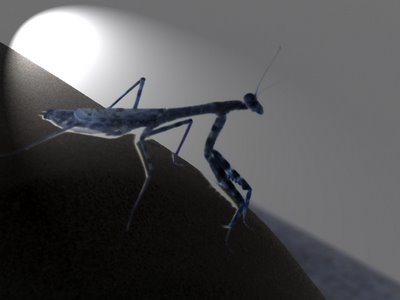
These shots were taken in the rain, for the most part, except for the last shot which was taken at night. I altered and enhanced the image using my Corel Photo Paint program.

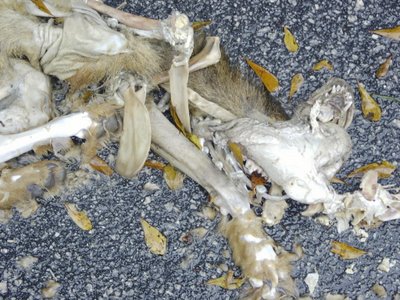
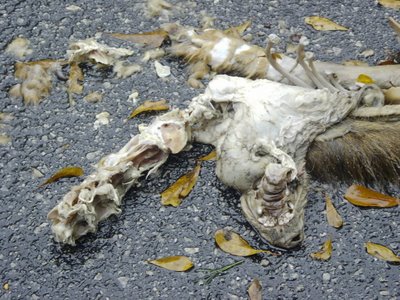
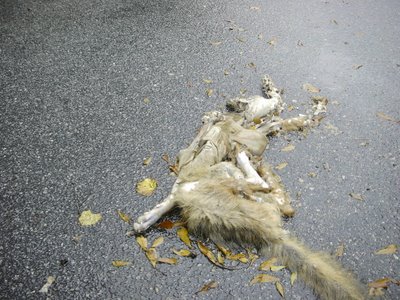
The first three are of an animal corpse I came across on a very deserted and isolated road. Because the animal seemed to have been partially skinned as well as being partially crushed by a vehicle or vehicles I could not say with absolute certainty what the animal was, but given the evidence of the remains and what had apparently been done to the corpse I think it most likely was a brown fox. I think it most likely the fox was shot or trapped, then killed and partially skinned, then the remains dumped on the road. I cannot be absolutely sure that was the sequence of events and even to verify what kind of animal it was would mean I would have had to have taken bone and hair samples for comparative analysis, but I think this the most likely set of deductions. In any case I always like taking shots of animal corpses as it gives me good practice in the taking of forensic photographic images.


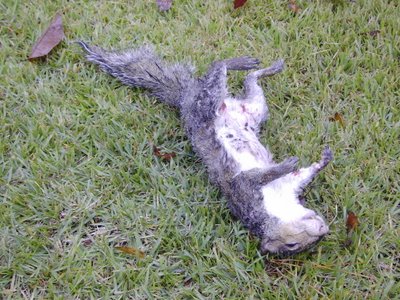
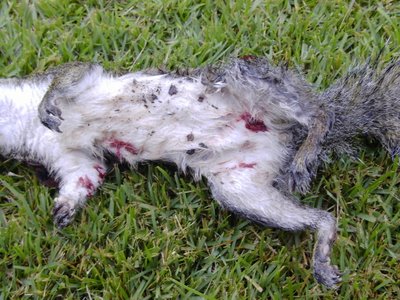
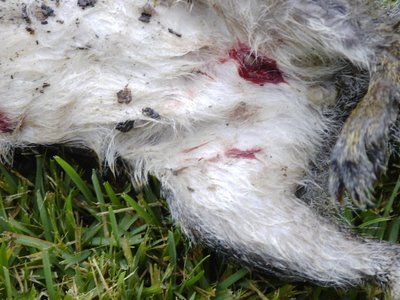
These shots are of a squirrel my Great Bernard caught and killed. You can clearly see the puncture wounds on the body of the squirrel which no doubt contributed to the shock which led to death. My Great Bernard was awfully proud of his kill, however not long after taking these shots my Great Dane bitch came along and took the corpse. At first my Great Bernard growled at her and seemed ready for a fight, but then he just turned and let her have it. He has learned already that if a female wants what you have then just go ahead and give it up, she'll get it eventually anyway.


This last shot is of a pregnant praying mantis I took near nightfall. I altered the image as I mentioned above. I intend to enter this photograph in Matt Bamberg's Halloween Photographic contest.


Wednesday, September 27, 2006

Humours of Idleness - The Boy is Back

Humours of Idleness - The Boy is Back

Now that the weather has cooled my Great Bernard Beethoven has become feisty again. He's almost three years old and about 140 to 150 pounds now, having lost some weight in the summer heat (though the way he has been eating lately he's packing on for winter again).

For the past week I've been going out at night to play ball with Beethoven and my new Great Dane bitch. It's just fanatic to see Beethoven rolling and fighting and wrestling and running with my puppy. My Great Dane is only seven months old but she is already nearly as tall as my Great Bernard, but Beethoven probably has 70 pounds or so on her still and he's immensely strong. But she is extremely strong for her age as well and lightning fast. She runs like a gazelle and is built like a horse. I'll post pictures of her to the Missal soon.

When they wrestle and fight she will stand upright and get on top of his back and then take a biting grip on the back of his neck like he is prey to be pulled to the ground. He'll take that for awhile and then he'll shake loose, run in a circle and arc back into her with his head down like a charging bull. (He often charges into me this way when we're playing and believe me he can easily take a full grown man down if he hits you right.) He hits her in the side if she doesn't sidestep quickly enough and Bam! She's rolling and pitching like a topsail, long legs going in every direction.

Then I'll jump in between them and wrestle with both and they'll knock me down and chew on my back and legs and arms pretty good. then I'll finally get back to my knees or up to my feet and grab a baseball and throw it and we'll all try to take it away from each other. They both fight pretty good, and both are tough as railroad spikes.

Man, it sure is good to see Beethoven fully over the death of his brother and playing and fighting and wrestling with her and with me. He's gonna be okay.
I LOVE IT!!

My boy is back in the saddle.