Poll of a Billion Monkeys

Showing posts with label Pope. Show all posts

Wednesday, June 27, 2007

Wednesday Religious Assessment 6/27/07

Wednesday Religious Assessment

Pope has Talk with Blair

Next Election

Elizabeth Edwards Goes West

Who Goest There?

Diagnosing Limbo

Gaza Goes to Hell in a Hamasbasket

The Elite View


CYRIL: CATECHESIS THAT EMBRACES BODY, SOUL AND SPIRIT

VATICAN CITY, JUN 27, 2007 (VIS) - The Holy Father dedicated his catechesis during today's general audience to St. Cyril of Jerusalem (ca. 315-387), whom he described as a bishop of a great "ecclesiastical culture, centered on the study of the Bible." The general audience, Benedict XVI's hundredth, began with his greeting pilgrims in St. Peter's Basilica, then continued in the Paul VI Hall. It was attended by around 7,000 people.

Cyril, the Pope explained, was consecrated a bishop in 348 by Acacius, metropolitan of Caesarea in Palestine and a supporter of Arianism. However, soon afterwards the two men came into contrast, "not only in the doctrinal field, but also in the area of jurisprudence, because Cyril claimed the autonomy of his see from the metropolitan see of Caesarea." He was exiled thee times and only in 378, following the death of the emperor Valens, could Cyril return to his see, "restoring unity and peace among the faithful." Of this saint we have his "Catecheses," 24 catechetical lectures introduced by a prologue.

"Catechesis," the Holy Father explained, "was an important moment, inserted into the broad context of the entire life - and especially the liturgical life - of the Christian community" where "the future faithful were gestated, accompanied by the prayer and witness of their brethren. This was a very important moment, it was not just an intellectual catechesis, but a way of learning to live in the Christian community. As a whole, Cyril's homilies constitute a systematic and pragmatic catechesis on the rebirth of Christians through Baptism."

From a doctrinal point of view, Cyril uses his work - through "a 'symphonic' relationship between the two Testaments" - to reach "Christ, center of the universe." In his moral catechesis, he invites people "to transform pagan forms of behavior on the basis of the new life in Christ." In his "mystagogic" catechesis, he brings the newly baptized "to discover the hidden mysteries ... contained in the baptismal rites."

"The mystery to be understood is the design of God which is accomplished through the salvific action of Christ in the Church. The mystagogic dimension is, in turn, accompanied by the dimension of symbols which express the spiritual experience they bring about."

"This is, then," the Pope concluded, "an integral catechesis which - involving body, soul and spirit - remains emblematic for the catechetical formation of Christians today. Let us ask the Lord to help us understand a Christianity that truly embraces all of our existence and makes us credible witnesses of Christ, true God and true man."
AG/CYRIL OF JERUSALEM/... VIS 070627 (440)

Wednesday, January 17, 2007

Wednesday Religious Assessment 1/17/07

Wednesday Religious Assessment

It's been a very interesting week or so for religious affairs in my opinion.

The Muslim Gandhi? - I don't know the veracity of this since this is the first time I've ever heard of this man. But the article did make me consider one interesting proposition. If an Islamic Gandhi or Martin Luther King came along, then would he receive the kind of popular media attention, either in Muslim circles or in the West, that could make the building of a non-violent Islamic movement possible, or would either Islamic media or Western media, or both, really wholly limit such a person's potential effectiveness?

Internet Porn Domains - I know the guy who actually came up with this idea. I've thought it a good idea from the first time I heard him mention it.

Executions - I'm hardly surprised North Korea executes Christians. I am rather surprised that word of such executions would leak out, especially the execution involving the North Korea Army General. If true this shows significant cracks developing within North Korea along several different vectors.

Religious Persecution

Muslim-Catholic Marriage

Collins, the HGP, God, and Evolution - I've read the book, a couple of months back. Although I don't agree with his position on everything about Science and God (I never agree with anybody on everything) I can say I found the book an excellent read, especially the parts about his personal background and both his religious and scientific experiences.

The Evangelical Black? - Since my wife is black I sometimes wonder if she feels this way, mainly because she is the only black at our church. Sometimes though I think she faces the reverse problem, sometimes I think she thinks people praise her just because she is the only black, or only black female.

The Collaborators

Hidden Spirituality in Holland


The Weak Christian - Can a weak Christian be effective at promoting Christian values to the Islamic world? According to Ali, no.

The House Church


Missional Apologetics - A rather fascinating new blog.


WEEK OF PRAYER FOR CHRISTIAN UNITY

VATICAN CITY, JAN 16, 2007 (VIS) - The Week of Prayer for Christian Unity, traditionally celebrated every year from January 18 to 25, is due to begin on Thursday. The theme for the 2007 initiative is: "He even makes the deaf to hear and the mute to speak."

The texts for reflection and prayer this year have been prepared by the Pontifical Council for Promoting Christian Unity, and by the Commission on Faith and Order of the World Council of Churches.

"This year's Week of Prayer for Christian Unity," says a communiqué released by the pontifical council, "brings together two themes, two invitations extended to Christian Churches and people: to pray and strive together for Christian unity, and to join together in responding to human suffering. These two responsibilities are deeply intertwined. Both relate to healing the Body of Christ (the Church), hence the principal text chosen for this year's week of prayer is a story of healing."

Each day of the Week will have a different theme:

January 18: In the beginning was the Word. "And God said..." (Gen 1).

January 19: The Saving Word of Christ. "He makes the deaf to hear and the mute to speak" (Mk 7: 31-37).

January 20: The Holy Spirit gives us the Word. "The Spirit ...will testify on my behalf" (Jn 15: 26).

January 21: The silence of the forgotten and the cries of the suffering. "If one member suffers all suffer together" (1 Cor 12: 26).

January 22: God's judgement on our silence. "Just as you did not do it to one of the least of these..." (Mt 25: 45).

January 23: Empowered to speak out. "But the woman ... came in fear and trembling ... and told Him the whole truth" (Mk 5: 33).

January 24: Forsakenness. "Why are You so far from helping me?" (Ps 22: 1)

January 25: Resurrection - glorification. "Every tongue should confess that Jesus Christ is Lord" (Phil 2: 11).

In the basilica of St. Paul's Outside-the-Walls at 5.30 p.m. on Thursday, January 25, Feast of the Conversion of the Apostle Paul, Benedict XVI will preside at the celebration of Vespers to mark the close of the Week of Prayer for Christian Unity.
.../PRAYER WEEK CHRISTIAN UNITY/... VIS 070116 (380)


Digg!

Save This Page

Wednesday, January 03, 2007

Wednesday Religious Assessment 1/3/07

Wednesday Religious Assessment

A Different Mission? - An interesting article on the possible shift in emphasis on mission projects involving so-called "Millennials."

The Emergent Church - An interesting debate on the so called emergent church and what it might or might not mean in the context of Greater Christianity.

Iranians Meet with Pope - It would be quite fascinating to know the actual contents of this representation and communication.

Ford and Faith - President Ford and his faith.

Islamist Defeats in Somalia and Reactions

From Good to Great - Personally, few things bother me more in life than less.

Hearts and Minds - An extremely astute observation about politics, the popular culture, and media influence upon the population at large. Just as with the War in Iraq, Hearts and Minds, and Psychological Warfare (in the true Greek sense of the word) is something that should be practiced "within American culture."

Marriage and Gender and Geography and Mating - Fascinating Danish study on the effects of geography and marriage upon gender and mating.

Christian Business Consultant

Digg!

Save This Page

Wednesday, December 20, 2006

Wednesday Religious Assessment 12/20/06

Wednesday Religious Assessment

The Wonderlost

The New Jew?

Newton, Einstein, and Maxwell -
All three were devout men who believed God had ordered the world and universe in a fascinating and ultimately understandable way.
These two articles lay out Maxwell's Science, which was profound, and His Faith, which was equally profound

State Group Proposes Cloning Ban

Divine Architecture

Intellectuals for the Latin Mass

Christmas Sermons

New National Security Threat?


HUMANITY AWAITS THE RENEWAL THAT CHRIST BRINGS

VATICAN CITY, DEC 20, 2006 (VIS) - Christmas was the central theme of the Pope's catechesis during his general audience, held this morning in the Paul VI Hall.

"In these final days of Advent," said the Holy Father, "the liturgy invites us to approach ... the stable in Bethlehem where the extraordinary event that changed the course of history took place: the birth of the Redeemer. On Christmas Eve, we will stand once again before the manger, and contemplate in wonder the 'Word made Flesh.' ... The chosen people awaited the Messiah but imagined him to be a powerful and victorious leader who would free his people from foreign oppression. Yet the Savior was born in silence and in absolute poverty."

"Does mankind in our own time still await the Savior?" the Pope asked. "It appears that many people consider God as foreign to their interests. They have no apparent need of Him, and live as if He did not exist or, worse still, as if He were an 'obstacle' to be removed in order to achieve self-fulfillment. Even among believers ... are those who let themselves be attracted by alluring mirages and distracted by misleading doctrines that propose illusory shortcuts to happiness.

"And yet," he added, "with all their contradictions, their anguish and their dramas - or perhaps precisely because of them - men and women today seek a road of renewal, of salvation, they seek a Savior and await, sometimes without knowing it, ... the coming of Christ, man's only true Redeemer."

"Of course, false prophets continue to propose 'low cost' salvation, which always ends up delivering resounding disillusionment. Indeed, the history of the last 50 years provides an example of this search for a 'low cost' Savior and highlights all the consequent disillusionment."

For this reason, the Pope concluded, Christians must, "with the testimony of their lives, propagate the truth of Christmas, which Christ brings to all men and women of good will. Born into poverty in the manger, Jesus came to offer everyone the joy and peace which alone can satisfy the needs of the human soul."

In his Italian-language greetings at the end of the audience, Benedict XVI said: "In a few days it will be Christmas, and I imagine that, in your homes, you are putting the final touches to your nativity scenes, which are such an evocative depiction of Christmas. I hope that this important element, not only of our spirituality but also of our culture and art, may endure as a simple and eloquent way to remember the One Who came 'to dwell among us'."

After the audience, the Pope was awarded the "Prize for Charity" by the "Banca Alimentare," an Italian foundation that organizes, among other initiatives, the National Day of Food Collection. The reason for granting the prize, says a communique released by the foundation, is that since the start of his pontificate, the Holy Father "has sought to present charity - the sincere giving of oneself to others - as a natural dimension of Christian life."

Cardinal Secretary of State Tarcisio Bertone S.D.B., speaking during a meeting between the Vatican Publishing House and other international publishers, highlighted the fact that the award coincides with Benedict XVI's decision to donate part of his copyright earnings to a study center founded by his former theology students.
AG/CHRISTMAS/... VIS 061220 (570)

Digg!

Save This Page

Thursday, November 30, 2006

WHY JOHN PAUL CHOSE BENEDICT

Karpas - Why John Paul Chose Benedict

Digg!

When the last election for Pope was announced I was dubious, skeptical, uncertain of the choice made. I am not Roman Catholic but like many Christians around the world I came to realize over time the enormous positive influence John Paul had upon Christendom and upon the affairs of the world as a whole. It had also, by the time of the death of John Paul Magnus, come to be my realization that the Pope, no matter whether one was Roman Catholic, Orthodox, or Protestant, could be the de facto representative of all Christians, if he behaved in a manner befitting a Great Pope. That is to say, John Paul had made a Papist out of me, even though I am not a Roman Catholic. Because John Paul had visibly and personally demonstrated to me what a Real Pope is supposed to look like, how he is supposed to behave, and how Christendom might really be represented if a man had truly determined himself upon holiness as a personal and spiritual goal. John Paul was a Saint during the course of most of his life, not a perfect man of course, but a True Saint in the broadest sense of the term, both personally and institutionally. He was also a Saint in the old sense, in the ancient sense. Like a Saint Francis or a Saint Peter or a Saint Nicholas. The kind they rarely make anymore, but that the world sure could use a lot more of.

So when I later learned that John Paul had talked to the future Benedict before his death, and had told his old friend Ratzinger that if offered the post of Pope he should accept it, I began to feel much, much better. That this new Pope would be less likely a move away from God and rather a move towards a different expression of God. For John Paul and Joseph had been old friends, brothers in the cloth, and Co-Communicants of a form of modern saintliness developed from a lifetime of absorption in divine things and human suffering. John Paul, like many Saints of old was possessed of a not totally unique, but definitely nevertheless rare spiritual gift, the ability to look into the hearts of his fellow men and discern what lay within, good and ill. And where that would likely lead in the future. He looked at the Cardinal and saw three things, an old brother and friend in Christ, a basically good and humble man devoted to God and service to the world, and the makings of one helluvah new Pope. The kind that gives one helluvah problem to the problem of Hell, and Hell on Earth. And that’s sure as hell okay by me.

Now, Benedict is no cross-country skier, he doesn’t woo and wow the crowds with his rock style oratory, he isn’t much on the one step, stand-up punch line. He’s more of the old time Rock of Ages guy, he’s a Requiem Mass, a mystery of the Virgin Mary man in an age of Madonna inspired Pop Kaballah, and Scientology wig-outs on Oprah shows. But the man has what it takes in the lurch, the ability to speak the will of God and the Grace of God and the forgiveness and universal brotherhood of God while still demonstrating by action and idea that there are some things God just doesn’t really care for very much. And is not very well impressed by. And is not willing to tolerate. Like the murder of innocent people over cartoons and speechmaking.

Being a Christian is no easy task. The Role Model is an impossibly hard act to follow. Cause he’s just that good at what he does. You don’t get vacations or time off for good behavior, good behavior comes with the territory, as much as you can possibly muster over as large a swath of territory as you can reach, anyway. It doesn’t pay much and costs a lot sometimes, though the retirement benefits are pretty darn good. (However I sometimes have the disconcerting feeling that we Christians are gonna be mightily surprised when after death we are told by God as he rubs his hands and smiles enigmatically, “Okay kiddies, glad you’re finally warmed up, now let’s really get to work!”) The hours are excessive, eternity is a mighty long time, the work ain’t easy, and sometimes, a lot of times depending on where you live and how much guts you have, it’s downright lethal. A lot is expected of you, the responsibilities are writ large, the demands are constant, and it’s not for the weak of heart, mind, body, soul, or spirit.

I imagine that’s doubly or triply so for a Pope, a Patriarch, a Pastor, a Preacher, a Candlemass Maker, or just any old Christian who decides to throw his Faith into the public arena. To enter the Circus Maximus of modern life that we call human society. Somebody is gonna decide they want to crawl as deep up your rectum as they figure they can fit to get a good look at whether you’re really passing off the Bread of Life or just any old horseshit that you’re trying to pawn as manna. But then again that’s life, ain’t it? A Real Man works from his soul, God reads the soul, and the world wonders if there really is such a thing, and if there is, how much can you sell it for?

And you can’t blame the curious for wondering either. If I saw a man promising eternal life and all it cost was to surrender your soul, I’d wanna investigate too. As a matter of fact I have, and at one time or another I’ve found men selling Blue Sky and Soap Bubbles, and at others times I’ve run across men who reached inside of me, plucked out my heart, and said, “Here kid, it ain’t much but if you’re serious God will sell you the whole farm for nothing more than this. But then you gotta bury this deep and see what will grow, if anything. The soil is good so if you push up anything worth keeping go ahead and give it away. That’s the way we do things around here.” And they were right of course, it ain’t much to pay considering what you purchase, and might possibly even produce, but when it’s all you got you tend to take a shine to the devil you already know. That’s neither here nor there I guess, and if you’re God it’s pert’n’near everywhere I reckon, but I mention it to illustrate this point, it seems to me that from what I’ve seen so far Benedict is just that kind of heartless. That is, God has his already. And He’s not giving it back apparently, and I’m not sure Benedict would want the old model anyway. How you gonna keep em down on the Farm God when they’ve seen a way to Thee?

You know the thing that’s strange about the way Christ invests in a man, and something I mean to ask him about one day is, “you take a fella who should amount to nothing, reshape him into something acceptable, and then constantly remind him he’s a nobody again just so he can be of use to everybody else.” I see where you’re coming from well enough, and even how well it works, but Good Lord Almighty, you’ve got to go bankrupt first before you even make a dime. To which I guess he’ll reply, “Jack, if I’d done it your way then you’d have kept your own soul on the cheap and lost the world for nothing. And what does it profit a man to save his own soul and yet lose the whole World?”

I guess that’s a question above my paygrade. Above Benedict’s paygrade come to that. Ours is not to wonder why, ours is this, to do in life. People bigger and smarter than us plan the party; we just dance the tune, even if some of us are tone-deaf and rhythmically challenged. Nevertheless from what I’ve seen so far I’m a liking this Papa Bene. He’s okay by me. I’ll be praying for ya Papa. Give em Heaven for me, will ya? And keep the change. You’ve earned it.


© JWG, Jr. 2006

Thursday, November 16, 2006

Wednesday Religious Assessment 11/15/06

Wednesday Religious Assessment


Pope calls Curia to discuss married priests, Archbishop Milingo - I have a personal interest in this matter. See here.

Violence grows against Christians in Iraq

Entry of the Theotokos Church of Hengdaohezi - to me an extremely beautiful church.

Coptic Orthodox school enjoys growth - I sometimes attend Mass on high Holy Days at the local Coptic church. The congregates there are extremely nice, many refugees from Egypt. I especially enjoy Easter Mass there.

Fate of partial-birth abortion ban may rest with Kennedy


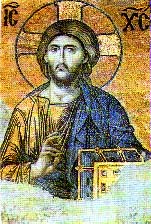
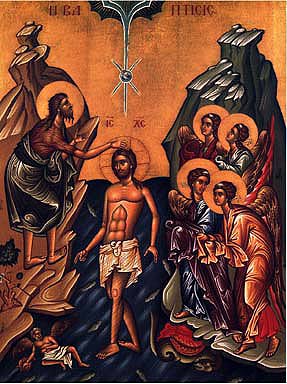
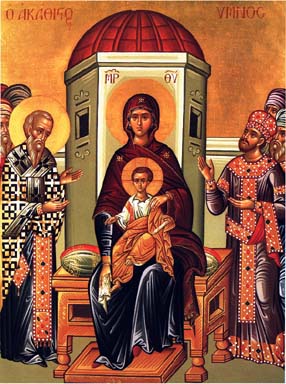
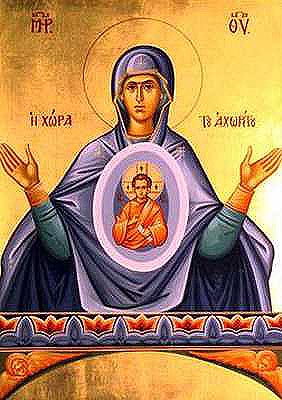
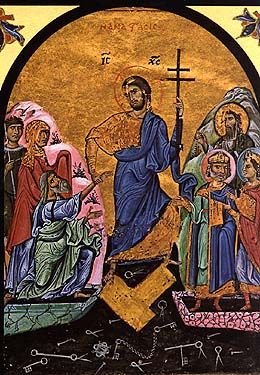
Icons - I have a personal love of Eastern and Orthodox Icons.
To finish out today, some Icons I like.


Saturday, November 11, 2006

Pope Visits Turkey

Karpas - Pope Visits Turkey

I don't think the dialogue with Bardakoglu will come to much, but we'll see.

I'm awfully glad to see Benedict carry on John Paul's legacy of dialogue with the Orthodox churches however and expect Benedict and Bartholomew to hit it off well.
As some of you know I intend, after I retire to become a secular Orthodox Priest and so I'm glad to see a reconciliation between East and West and a movement towards a once again united Christendom.

It did however strike me as interesting that all three men in the series of meetings in Turkey have names starting with the letter B.

I wouldn't mind touring the Hagia Sophia myself. Of all the great historical churches in the world that would rank right up there as one of my top two or three favorites to visit.


Jack.


Pope to meet with Islamic critic, Orthodox patriarch
Updated 11/11/2006 12:03 PM ET

By Umit Bektas, Reuters

Thousands gathered Nov. 4 at Mustafa Kemal Ataturk's mausoleum in Ankara, Turkey, to rally against what they see as radical Islamic threats to the secular Turkish republic.

VATICAN CITY (AP) — Pope Benedict XVI will meet in Turkey later this month with a top Islamic cleric who denounced the pope's remarks on Islam and violence.
During the pope's Nov. 28-Dec. 1 visit to the predominantly Muslim nation, he will also visit a symbol of Turkey's official commitment to secularism — the mausoleum of the Mustafa Kemal Ataturk, who is honored as the founder of the modern Turkish state.

The Vatican on Saturday released details of the trip, which was originally planned so that Benedict could meet with Ecumenical Patriarch Bartholomew I, the Istanbul-based spiritual leader of the world's Orthodox Christians, as the pontiff pursues closer relations among Christians.

But the trip quickly turned into a test of Catholic-Muslim relations after much of the Muslim world reacted angrily to a Sept. 12 speech in which Benedict quoted a 14th-century Byzantine emperor describing Islam as a religion spread by the sword.

One of the first to decry Benedict's speech was Turkey's president for religious affairs, Ali Bardakoglu, a top Islamic cleric who said criticism of Islam threatened world peace. Benedict and Bardakoglu will meet within hours of the pope's arrival in Ankara, the Turkish capital, on Nov. 28. The pope will also deliver a speech during his encounter with the cleric, the Vatican said.

Full Story

Monday, September 25, 2006

The Exchange - Another Effort

The Exchange - Another Effort

Overall, another affair well handled by the Vatican. He did not apologize, and should not have, but he did reconcile.

http://www.foxnews.com/story/0,2933,215477,00.html

The Exchange - Going Home

The Exchange - Going Home

Many of you know of my personal interest in this matter. Not just of a reconciliation between the Catholic Church and Science, though I think that a very good place to start, but of a reconciliation between all Christian Churches and Science.

So I'm very glad to see this and Benedict's interest in this.
The more I see and read of Benedict the more I truly like the man.
I see now why John Paul groomed him and hoped he would be chosen.
If he lives long enough he could be an excellent pope.


Pope's evolution seminar to be published

Posted 9/6/2006 7:59 AM ET

Staff and wire reports
USA Today
Pope Benedict XVI and his former doctoral students plan to publish the proceedings of a recent seminar on evolution to promote a dialogue between faith and science on the origins of life, participants say.
The minutes, to be issued later this year, will show how Catholic theologians see no contradiction between their belief in divine creation and the scientific theory of evolution, participants said after the annual closed-door meeting ended Sunday.

Controversy surrounding the theory of evolution has grown in the USA, where conservative Christians who oppose teaching it in public schools promote rival views such as intelligent design, which scientists reject as religion in disguise.
Benedict has been "concerned for a long time, and especially now that he is pope, about fostering a discussion between faith and reason," the Rev. Stephan Horn, a German theologian who organized the sessions, told Reuters.
"He probably believes there is not enough public discussion about this, so that's why he wants to revive it."

Monday, September 18, 2006

The Glair - Imagine the World without a Pope

The Glair - Imagine the World without a Pope


Imagine the World without a Pope

By Johnson Willy Geeter for Missive News

Last updated: 7:20 PM
Monday, September 18, 2006


Recently this reporter was privileged to attend a pro-Islamic rally at an undisclosed Mosque in the center of a major urban area in the heart of Europe.

“Imagine a world without the Pope!” These striking words, shouted in reaction to the pope’s critical condemnation of the supposed violent tendencies of Islam by the Ayatotal Jihadallalah, sparked a chorus of approval. Young Muslims immediately burned the pope in effigy, as if on cue. The Ayatotal (a.k.a. the Grand Muffititi) an outspoken proponent of world Islam continued with his fiery diatribe.

“Islam, that most reasonable of all religions, cannot tolerate such criticism and unreasonableness! Words kill us in our heart, make us bleed with fear and sensitivity, and saying bad things about us makes us feel really bad inside. Deep down inside. To correct this feeling of shame and bitterness we will all feel better when we have killed the pope!” Another roar of approval followed.

“When you criticize Islam it is like criticizing an unclean woman on her menstrual flow. You cannot do this and not expect the Wrath of Allah!”

“Our prophet said, ‘Kill all the Infidels’ and I say yes, kill everyone as the prophet says, peace be upon him. And the quickest way to peace is through killing!” At this point thousands of Muslims in attendance began to shout, “Yes, kill for peace! Kill for peace! Peace be upon them! Let them die.”

“We call the curse of Allah down upon the head of the infidel. Only then will the infidel understand that we kill him for his own good, so that he may burn in hell in the name of Islam. Peace be upon them! Peace be upon them!”

Allah was unavailable for comment, but speaking through his spokesman, the Grand Muffititi, it is apparent that Allah would naturally approve of the sentiment.

“Reason tells us that there is no way but our way. Reason tells us that we must blindly ignore all criticism and look away from the evidence. The evidence is a trick of the Great Satan. The Great Satan is the Father of Truth that lies. We must be children of lies that speak the truth. It is not up to us to reform, it is up to the infidels to die. There’s nothing wrong with us that a little mass killing can’t fix.”

“You tell em Titi!” A voice could be heard to shout in the background. Another roar of chants went up. “Titis for all Muslims, Titis for all Muslims!” At this the Ayatotal Jihadallalah smiled knowingly and nodded his approval.

“Yes, all Muslims should have Titis,” said the Ayatotal. “This is the way we are and the way we act. True Muslims have Titis and need their Titis to lead them!”

“Allah be praised,” was the natural reaction.

“We are like the American gansta rappers, we must be merciless and grab our crotches whenever we hear devilish criticisms of the true faith. We must frown and seek our revenge, we must be hard, street hard, and put on our game face, we must bust a move for Allah! We must pop a cap in any bitch who opens their mouth to backtalk us. Backtalk us bitch and get the prophetical beat-down!” The crowd erupted once more in pleasure.

“But, but, but…” continued the Ayatotal Titi, “deep inside we are like a delicate, little, vulnerable buttercup of a flower, full of peace and sunshine like the prophet, peace be upon him. We only cap bitches because they need a cappin. If we had our preference then we’d just beat out bitches till they was black and blue, wrap em up in bed sheets, knock em up, and keep em down on the old plantation. Bitches ain’t no trouble down on the plantation! Specially whens they can’t read nor write.”

“The pope is an old bitch! America is a good-looking bitch! Israel is a hot bitch!!” the crowd screamed fanatically with desire.

“That’s right,” shouted the Ayatotal in return. “And Islam knows how to treat her bitches. We enslave them! And if they backtalk us then set them on fire with petrol. And brothers, do we have plenty of petrol.”

“Yeah, plenty of petrol, plenty of petrol!” The young Muslim men shouted in loud cadence.

“But not so much we don’t need nuclear energy!”

“We need nuclear energy! We need nuclear energy!” came the determined reply.

“Burn the pope with uranium!”

“Burn the pope with uranium!”

“Peace through Jihad!”

“Peace through Jihad”

“Reason through murder!”

“Reason through murder!”

“Now imagine a world without a pope. How we gonna get there?”

“Kill that bitch!”

“Now you understand Islam,” said the Ayatotal Jihadallalah. “So go forth into all the world and spread the Good News!”


© JWG 2006

Saturday, September 16, 2006

The Exchange - Stick to Your Crosses

The Exchange - Stick to Your Crosses

In my opinion Benedict should in no way apologize for his actual remarks, nor for the remarks of Emperor Manuel II Paleologus. They were both right to criticize the Islamic ideal and propensity of attempting to spread faith by the sword, and the pope was right about his critique of Western Society, especially European Western Society. His criticisms of the Western Educational system are also interesting, good, true, and very beneficial. Stick to your crosses Father, and don't waver.

I also find it extremely fascinating that the pope is attempting to harmonize Greek and Christian thought and by implication Greek Orthodoxy and more general Western Christian traditions. In this respect I agree with him completely as well.

After a prior century of Germans like Himmler and Hitler (even though he wasn't really German) it is extremely refreshing and nice to hear a German speaking like a Christian, and even a Greek Christian again.

Benedict may turn out to be a very interesting and useful pope indeed.


Address by the pope:

APOSTOLIC JOURNEY OF HIS HOLINESS BENEDICT XVI TO MÜNCHEN, ALTÖTTING AND REGENSBURG (SEPTEMBER 9-14, 2006)
MEETING WITH THE REPRESENTATIVES OF SCIENCE
LECTURE OF THE HOLY FATHER


Aula Magna of the University of RegensburgTuesday, 12 September 2006

Faith, Reason and the University Memories and Reflections

Your Eminences, Your Magnificences, Your Excellencies,Distinguished Ladies and Gentlemen,

It is a moving experience for me to be back again in the university and to be able once again to give a lecture at this podium. I think back to those years when, after a pleasant period at the Freisinger Hochschule, I began teaching at the University of Bonn. That was in 1959, in the days of the old university made up of ordinary professors. The various chairs had neither assistants nor secretaries, but in recompense there was much direct contact with students and in particular among the professors themselves. We would meet before and after lessons in the rooms of the teaching staff. There was a lively exchange with historians, philosophers, philologists and, naturally, between the two theological faculties. Once a semester there was a dies academicus, when professors from every faculty appeared before the students of the entire university, making possible a genuine experience of universitas - something that you too, Magnificent Rector, just mentioned - the experience, in other words, of the fact that despite our specializations which at times make it difficult to communicate with each other, we made up a whole, working in everything on the basis of a single rationality with its various aspects and sharing responsibility for the right use of reason - this reality became a lived experience. The university was also very proud of its two theological faculties. It was clear that, by inquiring about the reasonableness of faith, they too carried out a work which is necessarily part of the "whole" of the universitas scientiarum, even if not everyone could share the faith which theologians seek to correlate with reason as a whole. This profound sense of coherence within the universe of reason was not troubled, even when it was once reported that a colleague had said there was something odd about our university: it had two faculties devoted to something that did not exist: God. That even in the face of such radical scepticism it is still necessary and reasonable to raise the question of God through the use of reason, and to do so in the context of the tradition of the Christian faith: this, within the university as a whole, was accepted without question.

I was reminded of all this recently, when I read the edition by Professor Theodore Khoury (Münster) of part of the dialogue carried on - perhaps in 1391 in the winter barracks near Ankara - by the erudite Byzantine emperor Manuel II Paleologus and an educated Persian on the subject of Christianity and Islam, and the truth of both. It was presumably the emperor himself who set down this dialogue, during the siege of Constantinople between 1394 and 1402; and this would explain why his arguments are given in greater detail than those of his Persian interlocutor. The dialogue ranges widely over the structures of faith contained in the Bible and in the Qur'an, and deals especially with the image of God and of man, while necessarily returning repeatedly to the relationship between - as they were called - three "Laws" or "rules of life": the Old Testament, the New Testament and the Qur'an. It is not my intention to discuss this question in the present lecture; here I would like to discuss only one point - itself rather marginal to the dialogue as a whole - which, in the context of the issue of "faith and reason", I found interesting and which can serve as the starting-point for my reflections on this issue.

In the seventh conversation (*4V8,>4H - controversy) edited by Professor Khoury, the emperor touches on the theme of the holy war. The emperor must have known that surah 2, 256 reads: "There is no compulsion in religion". According to the experts, this is one of the suras of the early period, when Mohammed was still powerless and under threat. But naturally the emperor also knew the instructions, developed later and recorded in the Qur'an, concerning holy war. Without descending to details, such as the difference in treatment accorded to those who have the "Book" and the "infidels", he addresses his interlocutor with a startling brusqueness on the central question about the relationship between religion and violence in general, saying: "Show me just what Mohammed brought that was new, and there you will find things only evil and inhuman, such as his command to spread by the sword the faith he preached". The emperor, after having expressed himself so forcefully, goes on to explain in detail the reasons why spreading the faith through violence is something unreasonable. Violence is incompatible with the nature of God and the nature of the soul. "God", he says, "is not pleased by blood - and not acting reasonably (F×< 8`(T) is contrary to God's nature. Faith is born of the soul, not the body. Whoever would lead someone to faith needs the ability to speak well and to reason properly, without violence and threats... To convince a reasonable soul, one does not need a strong arm, or weapons of any kind, or any other means of threatening a person with death...".The decisive statement in this argument against violent conversion is this: not to act in accordance with reason is contrary to God's nature. The editor, Theodore Khoury, observes: For the emperor, as a Byzantine shaped by Greek philosophy, this statement is self-evident. But for Muslim teaching, God is absolutely transcendent. His will is not bound up with any of our categories, even that of rationality. Here Khoury quotes a work of the noted French Islamist R. Arnaldez, who points out that Ibn Hazn went so far as to state that God is not bound even by his own word, and that nothing would oblige him to reveal the truth to us. Were it God's will, we would even have to practise idolatry.

At this point, as far as understanding of God and thus the concrete practice of religion is concerned, we are faced with an unavoidable dilemma. Is the conviction that acting unreasonably contradicts God's nature merely a Greek idea, or is it always and intrinsically true? I believe that here we can see the profound harmony between what is Greek in the best sense of the word and the biblical understanding of faith in God. Modifying the first verse of the Book of Genesis, the first verse of the whole Bible, John began the prologue of his Gospel with the words: "In the beginning was the Logos." This is the very word used by the emperor: God acts, F×< 8`(T, with logos. Logos means both reason and word - a reason which is creative and capable of self-communication, precisely as reason. John thus spoke the final word on the biblical concept of God, and in this word all the often toilsome and tortuous threads of biblical faith find their culmination and synthesis. In the beginning was the logos, and the logos is God, says the Evangelist. The encounter between the Biblical message and Greek thought did not happen by chance. The vision of Saint Paul, who saw the roads to Asia barred and in a dream saw a Macedonian man plead with him: "Come over to Macedonia and help us!" (cf. Acts 16:6-10) - this vision can be interpreted as a "distillation" of the intrinsic necessity of a rapprochement between Biblical faith and Greek inquiry.

In point of fact, this rapprochement had been going on for some time. The mysterious name of God, revealed from the burning bush, a name which separates this God from all other divinities with their many names and simply declares "I am", already presents a challenge to the notion of myth, to which Socrates' attempt to vanquish and transcend myth stands in close analogy. Within the Old Testament, the process which started at the burning bush came to new maturity at the time of the Exile, when the God of Israel, an Israel now deprived of its land and worship, was proclaimed as the God of heaven and earth and described in a simple formula which echoes the words uttered at the burning bush: "I am". This new understanding of God is accompanied by a kind of enlightenment, which finds stark expression in the mockery of gods who are merely the work of human hands (cf. Ps 115). Thus, despite the bitter conflict with those Hellenistic rulers who sought to accommodate it forcibly to the customs and idolatrous cult of the Greeks, biblical faith, in the Hellenistic period, encountered the best of Greek thought at a deep level, resulting in a mutual enrichment evident especially in the later wisdom literature. Today we know that the Greek translation of the Old Testament produced at Alexandria - the Septuagint - is more than a simple (and in that sense really less than satisfactory) translation of the Hebrew text: it is an independent textual witness and a distinct and important step in the history of revelation, one which brought about this encounter in a way that was decisive for the birth and spread of Christianity. A profound encounter of faith and reason is taking place here, an encounter between genuine enlightenment and religion. From the very heart of Christian faith and, at the same time, the heart of Greek thought now joined to faith, Manuel II was able to say: Not to act "with logos" is contrary to God's nature.

In all honesty, one must observe that in the late Middle Ages we find trends in theology which would sunder this synthesis between the Greek spirit and the Christian spirit. In contrast with the so-called intellectualism of Augustine and Thomas, there arose with Duns Scotus a voluntarism which, in its later developments, led to the claim that we can only know God's voluntas ordinata. Beyond this is the realm of God's freedom, in virtue of which he could have done the opposite of everything he has actually done. This gives rise to positions which clearly approach those of Ibn Hazn and might even lead to the image of a capricious God, who is not even bound to truth and goodness. God's transcendence and otherness are so exalted that our reason, our sense of the true and good, are no longer an authentic mirror of God, whose deepest possibilities remain eternally unattainable and hidden behind his actual decisions. As opposed to this, the faith of the Church has always insisted that between God and us, between his eternal Creator Spirit and our created reason there exists a real analogy, in which - as the Fourth Lateran Council in 1215 stated - unlikeness remains infinitely greater than likeness, yet not to the point of abolishing analogy and its language. God does not become more divine when we push him away from us in a sheer, impenetrable voluntarism; rather, the truly divine God is the God who has revealed himself as logos and, as logos, has acted and continues to act lovingly on our behalf. Certainly, love, as Saint Paul says, "transcends" knowledge and is thereby capable of perceiving more than thought alone (cf. Eph 3:19); nonetheless it continues to be love of the God who is Logos. Consequently, Christian worship is, again to quote Paul - "8@(46¬ 8"JD,\"", worship in harmony with the eternal Word and with our reason (cf. Rom 12:1).This inner rapprochement between Biblical faith and Greek philosophical inquiry was an event of decisive importance not only from the standpoint of the history of religions, but also from that of world history - it is an event which concerns us even today. Given this convergence, it is not surprising that Christianity, despite its origins and some significant developments in the East, finally took on its historically decisive character in Europe. We can also express this the other way around: this convergence, with the subsequent addition of the Roman heritage, created Europe and remains the foundation of what can rightly be called Europe.

The thesis that the critically purified Greek heritage forms an integral part of Christian faith has been countered by the call for a dehellenization of Christianity - a call which has more and more dominated theological discussions since the beginning of the modern age. Viewed more closely, three stages can be observed in the programme of dehellenization: although interconnected, they are clearly distinct from one another in their motivations and objectives.

Dehellenization first emerges in connection with the postulates of the Reformation in the sixteenth century. Looking at the tradition of scholastic theology, the Reformers thought they were confronted with a faith system totally conditioned by philosophy, that is to say an articulation of the faith based on an alien system of thought. As a result, faith no longer appeared as a living historical Word but as one element of an overarching philosophical system. The principle of sola scriptura, on the other hand, sought faith in its pure, primordial form, as originally found in the biblical Word. Metaphysics appeared as a premise derived from another source, from which faith had to be liberated in order to become once more fully itself. When Kant stated that he needed to set thinking aside in order to make room for faith, he carried this programme forward with a radicalism that the Reformers could never have foreseen. He thus anchored faith exclusively in practical reason, denying it access to reality as a whole.The liberal theology of the nineteenth and twentieth centuries ushered in a second stage in the process of dehellenization, with Adolf von Harnack as its outstanding representative. When I was a student, and in the early years of my teaching, this programme was highly influential in Catholic theology too. It took as its point of departure Pascal's distinction between the God of the philosophers and the God of Abraham, Isaac and Jacob. In my inaugural lecture at Bonn in 1959, I tried to address the issue, and I do not intend to repeat here what I said on that occasion, but I would like to describe at least briefly what was new about this second stage of dehellenization. Harnack's central idea was to return simply to the man Jesus and to his simple message, underneath the accretions of theology and indeed of hellenization: this simple message was seen as the culmination of the religious development of humanity. Jesus was said to have put an end to worship in favour of morality. In the end he was presented as the father of a humanitarian moral message. Fundamentally, Harnack's goal was to bring Christianity back into harmony with modern reason, liberating it, that is to say, from seemingly philosophical and theological elements, such as faith in Christ's divinity and the triune God. In this sense, historical-critical exegesis of the New Testament, as he saw it, restored to theology its place within the university: theology, for Harnack, is something essentially historical and therefore strictly scientific. What it is able to say critically about Jesus is, so to speak, an expression of practical reason and consequently it can take its rightful place within the university. Behind this thinking lies the modern self-limitation of reason, classically expressed in Kant's "Critiques", but in the meantime further radicalized by the impact of the natural sciences. This modern concept of reason is based, to put it briefly, on a synthesis between Platonism (Cartesianism) and empiricism, a synthesis confirmed by the success of technology. On the one hand it presupposes the mathematical structure of matter, its intrinsic rationality, which makes it possible to understand how matter works and use it efficiently: this basic premise is, so to speak, the Platonic element in the modern understanding of nature. On the other hand, there is nature's capacity to be exploited for our purposes, and here only the possibility of verification or falsification through experimentation can yield ultimate certainty. The weight between the two poles can, depending on the circumstances, shift from one side to the other. As strongly positivistic a thinker as J. Monod has declared himself a convinced Platonist/Cartesian.
This gives rise to two principles which are crucial for the issue we have raised. First, only the kind of certainty resulting from the interplay of mathematical and empirical elements can be considered scientific. Anything that would claim to be science must be measured against this criterion. Hence the human sciences, such as history, psychology, sociology and philosophy, attempt to conform themselves to this canon of scientificity. A second point, which is important for our reflections, is that by its very nature this method excludes the question of God, making it appear an unscientific or pre-scientific question. Consequently, we are faced with a reduction of the radius of science and reason, one which needs to be questioned.I will return to this problem later. In the meantime, it must be observed that from this standpoint any attempt to maintain theology's claim to be "scientific" would end up reducing Christianity to a mere fragment of its former self. But we must say more: if science as a whole is this and this alone, then it is man himself who ends up being reduced, for the specifically human questions about our origin and destiny, the questions raised by religion and ethics, then have no place within the purview of collective reason as defined by "science", so understood, and must thus be relegated to the realm of the subjective. The subject then decides, on the basis of his experiences, what he considers tenable in matters of religion, and the subjective "conscience" becomes the sole arbiter of what is ethical. In this way, though, ethics and religion lose their power to create a community and become a completely personal matter. This is a dangerous state of affairs for humanity, as we see from the disturbing pathologies of religion and reason which necessarily erupt when reason is so reduced that questions of religion and ethics no longer concern it. Attempts to construct an ethic from the rules of evolution or from psychology and sociology, end up being simply inadequate.

Before I draw the conclusions to which all this has been leading, I must briefly refer to the third stage of dehellenization, which is now in progress. In the light of our experience with cultural pluralism, it is often said nowadays that the synthesis with Hellenism achieved in the early Church was a preliminary inculturation which ought not to be binding on other cultures. The latter are said to have the right to return to the simple message of the New Testament prior to that inculturation, in order to inculturate it anew in their own particular milieux. This thesis is not only false; it is coarse and lacking in precision. The New Testament was written in Greek and bears the imprint of the Greek spirit, which had already come to maturity as the Old Testament developed. True, there are elements in the evolution of the early Church which do not have to be integrated into all cultures. Nonetheless, the fundamental decisions made about the relationship between faith and the use of human reason are part of the faith itself; they are developments consonant with the nature of faith itself. And so I come to my conclusion. This attempt, painted with broad strokes, at a critique of modern reason from within has nothing to do with putting the clock back to the time before the Enlightenment and rejecting the insights of the modern age. The positive aspects of modernity are to be acknowledged unreservedly: we are all grateful for the marvellous possibilities that it has opened up for mankind and for the progress in humanity that has been granted to us. The scientific ethos, moreover, is - as you yourself mentioned, Magnificent Rector - the will to be obedient to the truth, and, as such, it embodies an attitude which belongs to the essential decisions of the Christian spirit. The intention here is not one of retrenchment or negative criticism, but of broadening our concept of reason and its application. While we rejoice in the new possibilities open to humanity, we also see the dangers arising from these possibilities and we must ask ourselves how we can overcome them. We will succeed in doing so only if reason and faith come together in a new way, if we overcome the self-imposed limitation of reason to the empirically verifiable, and if we once more disclose its vast horizons. In this sense theology rightly belongs in the university and within the wide-ranging dialogue of sciences, not merely as a historical discipline and one of the human sciences, but precisely as theology, as inquiry into the rationality of faith.
Only thus do we become capable of that genuine dialogue of cultures and religions so urgently needed today. In the Western world it is widely held that only positivistic reason and the forms of philosophy based on it are universally valid. Yet the world's profoundly religious cultures see this exclusion of the divine from the universality of reason as an attack on their most profound convictions. A reason which is deaf to the divine and which relegates religion into the realm of subcultures is incapable of entering into the dialogue of cultures. At the same time, as I have attempted to show, modern scientific reason with its intrinsically Platonic element bears within itself a question which points beyond itself and beyond the possibilities of its methodology. Modern scientific reason quite simply has to accept the rational structure of matter and the correspondence between our spirit and the prevailing rational structures of nature as a given, on which its methodology has to be based. Yet the question why this has to be so is a real question, and one which has to be remanded by the natural sciences to other modes and planes of thought - to philosophy and theology. For philosophy and, albeit in a different way, for theology, listening to the great experiences and insights of the religious traditions of humanity, and those of the Christian faith in particular, is a source of knowledge, and to ignore it would be an unacceptable restriction of our listening and responding. Here I am reminded of something Socrates said to Phaedo. In their earlier conversations, many false philosophical opinions had been raised, and so Socrates says: "It would be easily understandable if someone became so annoyed at all these false notions that for the rest of his life he despised and mocked all talk about being - but in this way he would be deprived of the truth of existence and would suffer a great loss". The West has long been endangered by this aversion to the questions which underlie its rationality, and can only suffer great harm thereby. The courage to engage the whole breadth of reason, and not the denial of its grandeur - this is the programme with which a theology grounded in Biblical faith enters into the debates of our time. "Not to act reasonably, not to act with logos, is contrary to the nature of God", said Manuel II, according to his Christian understanding of God, in response to his Persian interlocutor. It is to this great logos, to this breadth of reason, that we invite our partners in the dialogue of cultures. To rediscover it constantly is the great task of the university.

***

NOTE:

The Holy Father intends to supply a subsequent version of this text, complete with footnotes. The present text must therefore be considered provisional.

© Copyright 2006 - Libreria Editrice Vaticana